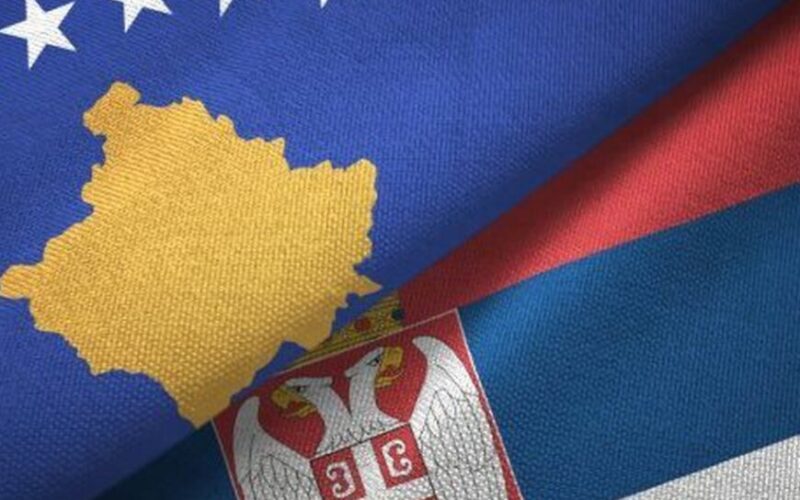
The Agreement on the Normalization of Relations between Kosova and Serbia of 2013, widely known as the Brussels Agreement, was conceived as a historic step toward stabilizing relations and advancing the European integration of both countries. However, thirteen years later, it has become one of the main instruments of Serbia’s narrative warfare against Kosova.
The synchronized political chorus in Serbia, ranging from Aleksandar Vučić to Ivica Dačić, from Petar Petković to Tomislav Nikolić, does not speak of normalization but of control. It does not seek solutions, but space for influence; it does not aim for peace, but for narrative dominance. This is no longer diplomacy, rather, it constitutes a form of refined state propaganda.
One of the most important elements of Serbian propaganda is selective memory. Political elites in Belgrade often “forget” that Serbia itself had requested an advisory opinion from the International Court of Justice on Kosova’s independence. This opinion, which confirmed that Kosova’s declaration of independence did not violate international law, represents a direct blow to the Serbian narrative.
However, instead of confronting this legal reality, Serbian actors shift the focus to the Association of Serb-Majority Municipalities, presenting it as an obligation that remains unfulfilled by Kosova. This approach is not merely selective, it is strategically manipulative. It detaches the Agreement from its context, portraying it as a one-sided contract in which Serbia has rights but no obligations tied to recognizing the reality of Kosova as a state.
In Serbian discourse, the Association is presented as a mechanism for protecting the rights of Serbs in Kosova. However, the way this concept is articulated reveals another dimension: its use as an instrument for political and institutional influence within Kosova.
This is where the metaphor of the “Trojan Horse” becomes relevant. Serbia seeks to establish a structure with broad powers that extend beyond the Constitution. This implies an attempt to build a parallel entity capable of challenging the authority of the state of Kosova from within. Therefore, the Association is not merely a matter of community rights, it is a strategic lever to preserve Serbia’s influence in Kosova and to hinder the consolidation of its statehood.
Serbian rhetoric does not genuinely aim at normalization, on the contrary it produces a continuous state of tension and distrust. This phenomenon can be defined as “anti-normalization”: a strategy that uses the language of dialogue to sabotage the dialogue process itself.
Within this framework, the Serb List and other structures influenced by Belgrade function as instruments of a proxy policy. These mechanisms do not aim to integrate Serbs into Kosova’s system but to keep them tied to Serbia’s structures. This approach creates a paradox: Serbia demands rights for the Serb community in Kosova while simultaneously undermining the institutions that would guarantee those rights in a sustainable manner.
A particularly concerning element is the involvement of academia and civil society in this discourse, contributing to the legitimization of the state narrative by giving it an intellectual façade. This makes the propaganda more sophisticated and more dangerous. What we are dealing with is not merely political statements but a sustained discursive production that includes analyses, studies, and opinions aimed at influencing public perception, both in Serbia and internationally. The intertwining of politics with the intellectual sphere thus creates a propagandistic ecosystem in which the state narrative is continuously reproduced and reinforced.
Serbia’s current policy toward Kosova cannot be fully understood without historical analysis. Vučić’s approach is often seen as a continuation of Slobodan Milošević’s policies, albeit adapted to a new international context. The main difference lies in the means, not in the objectives. Instead of using military force, Serbia today employs tools of hybrid warfare: propaganda, disinformation, political influence, and instrumentalization of ethnic communities.
Serbian propaganda is not limited to Kosova. It extends to other countries in the region, such as Montenegro, where initiatives by pro-Serbian parties to withdraw recognition of Kosova point to a broader strategy of destabilization. These actions make the provocative rhetoric used by Serbian elites even more dangerous, as it fuels ethnic tensions and undermines efforts toward stability in the Balkans.
What stands out most is that the very concept of “normalization” has been captured and distorted. Instead of implying mutual recognition and cooperation, it is used as a tool to advance unilateral interests. For Serbia, “normalization” implies a weak, fragmented, and dependent Kosova, whereas for Kosova and its international partners, it signifies a relationship based on equality and mutual recognition. This fundamental difference lies at the heart of the current conflict and explains why the 2013 Agreement continues to be a source of tension rather than a solution.
Serbian propaganda against Kosova, articulated through a coordinated political, academic, and civil chorus, is not a spontaneous phenomenon but a well-thought-out strategy aimed at reshaping political reality through narrative manipulation.
Ultimately, the 2013 Normalization Agreement, instead of serving as a foundation for peace and cooperation, has been transformed into a tool of this strategy. Through manipulation and instrumentalization, it is used to challenge Kosova’s statehood and to preserve Serbia’s influence. The key issue is no longer whether the Agreement is implemented but how it is interpreted and for what purpose it is used. /The Balkan Report/
Discover more from The Balkan Report
Subscribe to get the latest posts sent to your email.