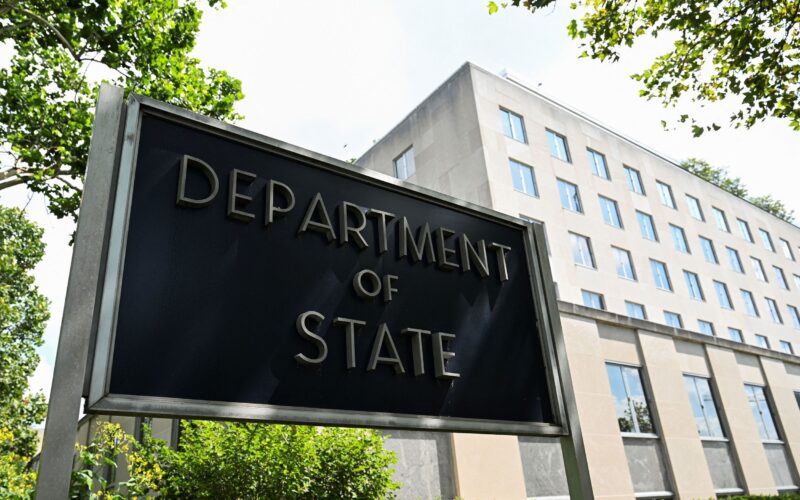
The publication of the latest U.S. State Department report on promoting regional stability represents far more than a routine foreign policy document. At a deeper level, it reflects a clear recalibration of how Washington conceives the international security architecture at a time of intensifying strategic competition with Russia and China. Within this new strategic vision, the Western Balkans are no longer treated as a diplomatic periphery to be managed through routine stabilization formulas, but as a space where a real contest for political, institutional, and geopolitical influence is unfolding.
Although the document does not dedicate separate chapters to Kosova, its political structure and strategic language place the country in a new position within American strategic calculations. Kosova is no longer viewed merely as an unfinished post-conflict transition issue, nor solely as a diplomatic file tied to dialogue with Serbia. In this report, it implicitly emerges as part of the forward line of defense for Western interests in Southeast Europe. This shift is significant because it signals a transformation in the U.S. approach toward the region.
For more than a decade, the Balkans have often been approached in certain Western circles through the logic of crisis management, where the overriding priority was preserving minimal stability, often at the expense of democratic standards. In practice, this approach created space for the consolidation of hybrid power structures in several countries across the region, where nominal stability frequently concealed institutional capture, pressure on the media, foreign intelligence penetration, and the gradual erosion of democratic order.
The new American report quietly rejects that philosophy. Instead, it articulates an approach based on the understanding that stability cannot be built on tolerating authoritarianism or strategic neutrality toward actors challenging the Western order. This message resonates directly across the Balkans, particularly when read in the context of Belgrade’s foreign policy and its relations with Moscow and Beijing. Within this framework, Kosova gains new strategic importance, not because of its territorial or economic size, but because of its clear Euro-Atlantic orientation and its resistance to influences Washington considers destabilizing.
The report identifies Russia as the primary source of hybrid operations in regions where Moscow seeks to preserve leverage against the West. In Kosova’s case, Russian influence has manifested for years not through direct presence, but through a mediated architecture, primarily via Serbia, pro-Russian political networks, Serbian-language media amplification, and coordinated disinformation and propaganda operations.
These mechanisms have operated according to a model familiar in other areas of Russian influence: the production of controlled crises, the instrumentalization of ethnic divisions, the delegitimization of local institutions, and the cultivation of an international perception that the conflict remains unresolved. Events in the north of Kosova in recent years, including recurring tensions, attacks on international missions, and organized escalations of violence, are increasingly being interpreted through this lens.
This is precisely where the U.S. report acquires particular political significance because it institutionalizes an interpretation long articulated by Kosova’s institutions that destabilization in the north is not the spontaneous product of local grievances, but part of a broader hybrid strategy in which regional actors and Russian interests intersect to challenge Western presence and credibility in the region.
Against the backdrop of intensifying geopolitical rivalry in the Balkans, U.S. support for the transformation of the Kosova Security Force takes on new strategic meaning. It reflects Washington’s emerging doctrine that strengthening the defense capacities of regional partners is essential to building resilience against destabilization, foreign interference, and security threats aimed at undermining stability in Southeast Europe.
This support has materialized over the years through advanced military training, expanded partnerships, modernization of logistical capabilities, the supply of modern defense systems, and the gradual alignment of the KSF’s operational standards with those of NATO.
For the United States, the transformation of the Security Force is part of a broader strategic logic in which local partners must build real capacities to confront hybrid threats, cyberattacks, and destabilizing operations characteristic of the twenty-first century. In this sense, a modern KSF is not merely an instrument of territorial defense, but a pillar of the state’s functional sovereignty and concrete proof that Kosova has entered a new phase of strategic consolidation.
The report also addresses China’s gradual penetration with equal seriousness. Unlike Russia, which operates through crisis and tension, Beijing advances through economic infrastructure, strategic investment, technology, and the creation of long-term institutional dependencies. Across the Balkans, this influence has become increasingly visible through infrastructure projects, surveillance technologies, and networks of economic influence that often generate political leverage.
Kosova has so far been relatively shielded from this influence, largely because of China’s non-recognition of its independence and Kosova’s strong pro-American orientation. Yet the report clearly suggests that modern security is no longer measured solely by physical borders. It is also measured through control over data, digital infrastructure, communication systems, and a state’s capacity to protect technological sovereignty. For Kosova, this constitutes a warning that demands serious institutional reflection.
In an era where political influence is increasingly built through technology and information, investment in cyber defense, network security, and digital resilience becomes just as vital as traditional defense capacities. One of the report’s strongest messages is that future conflicts will not necessarily unfold on conventional battlefields. They will be waged through institutional infiltration, espionage, information manipulation, narrative radicalization, and the gradual erosion of public trust in the state. Kosova is already experiencing this reality.
Recent investigations and convictions related to espionage, the exposure of infiltration networks, and coordinated destabilizing activities demonstrate that the country is not facing hypothetical threats, but a real low-intensity conflict unfolding in gray zones. The report institutionally legitimizes Kosova’s need to invest far more heavily in counterintelligence, cybersecurity, media resilience, and strategic communication.
Equally significant is the indirect message the report sends to Serbia. Its language on regimes cultivating opportunistic neutrality toward the West’s strategic rivals is politically unmistakable. Washington is signaling that the era in which short-term stability justified tolerance for strategic ambiguity is drawing to a close. This is a development that alters diplomatic balances across the region.
Ultimately, the report’s clearest message is that the United States is not retreating from the Balkans. On the contrary, it is reintegrating the region into its broader global strategy of competition with revisionist powers.
For Kosova, this represents a historic opportunity that should not be understood merely as a security guarantee, but as an invitation to political maturity. If it can recognize this moment and seriously invest in the capacities required by the new era of security, Kosova can position itself not simply as a beneficiary of U.S. support, but as a functional actor in safeguarding democratic stability in this part of Europe.
At a time when wars are fought as much through servers, information networks, and institutions as they are on physical terrain, this is the true test of modern sovereignty. And the State Department’s report makes one thing unmistakably clear: for Kosova, that test has now entered its decisive phase. /The Balkan Report/
Discover more from The Balkan Report
Subscribe to get the latest posts sent to your email.