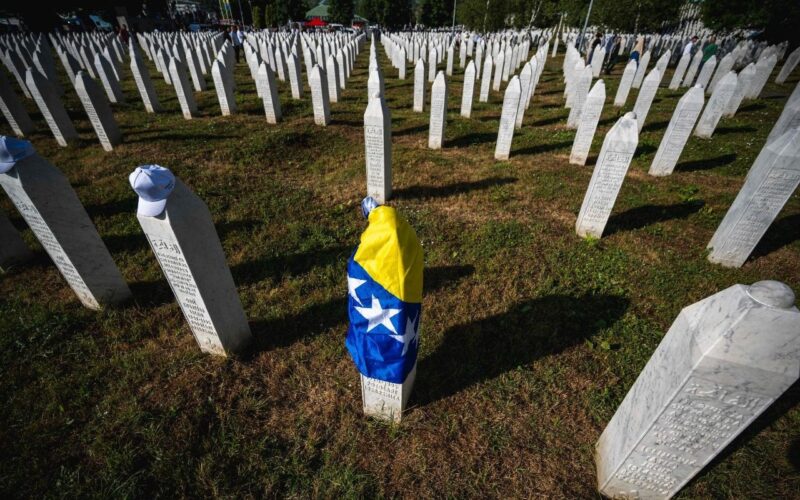
On 11 July 1995, Europe witnessed one of its greatest moral failures since the end of the Second World War. In Srebrenica, a small town in eastern Bosnia and Herzegovina, more than 8,000 Bosniak men and boys were systematically executed by Bosnian Serb forces under the command of Ratko Mladić. Within a matter of days, tens of thousands of women, children, and elderly people were forcibly expelled from their homes, while the town that the United Nations had declared a “safe area” became the darkest symbol of the international community’s inability to prevent an atrocity whose warning signs had long been evident.
Today, there is no longer any legal ambiguity about what occurred in Srebrenica. The International Criminal Tribunal for the former Yugoslavia (ICTY), followed by the International Court of Justice (ICJ), determined that the killings constituted genocide, making Srebrenica the only atrocity in post-1945 Europe to be judicially recognized as genocide. Yet beyond its legal definition, Srebrenica remains a political wound that continues to divide the Balkans and challenge the very foundations of the European project of peace and reconciliation.
The genocide did not begin in July 1995. It was the culmination of an ideology that, over many years, cultivated ethnic hatred, glorified historical victimhood, and portrayed violence as a legitimate means of achieving political objectives. To understand Srebrenica, one must return to the late 1980s, when Yugoslavia was entering its deepest political and economic crisis. Rather than becoming an opportunity for democratic reform, that crisis was exploited by nationalist elites seeking to build new state projects founded on ethnic principles.
A significant role in this process was played by the 1986 Memorandum of the Serbian Academy of Sciences and Arts (SANU). Although its authors presented it as an academic document, it quickly evolved into the political manifesto of modern Serbian nationalism. The memorandum advanced the narrative that the Serbian people had been victims of historical injustice and that Yugoslavia had undermined Serbian national interests. From this premise emerged the conclusion that the Serbian state possessed not only the right but also the historic duty to unite all territories inhabited by Serbs.
This philosophy was embraced and transformed into state policy by the regime of Slobodan Milošević. Under his leadership, nationalism ceased to be merely an academic concept or electoral rhetoric and became official state policy. The wars that erupted in Croatia, Bosnia and Herzegovina, and later in Kosovo were not spontaneous ethnic conflicts; rather, they formed part of a broader project aimed at reshaping demographic realities through force in order to create ethnically homogeneous territories.
Srebrenica represented the culmination of this project. From the beginning of the war in Bosnia and Herzegovina, the town had become a refuge for thousands of Bosniaks expelled from surrounding areas. For the political and military leadership of Republika Srpska, the existence of a Bosniak enclave in eastern Bosnia constituted an obstacle to their strategic objective of establishing territorial continuity with Serbia. Consequently, the elimination of this ethnic community was not merely a military operation but an integral part of a political strategy aimed at creating an ethnically pure territory.
In March 1995, Radovan Karadžić ordered the creation of “an unbearable situation of total insecurity with no hope of further survival or life” for the inhabitants of Srebrenica. This directive, later presented as evidence before the Hague Tribunal, clearly demonstrates that the objective was not simply to seize the town but to destroy the minimum conditions necessary for civilian survival. The blockade of food supplies, the denial of medicine, continuous shelling, and the town’s isolation all formed part of the same strategy that preceded the genocide.
When the final offensive began on 6 July 1995, Srebrenica was effectively defenseless. The Dutch UN peacekeeping contingent lacked the personnel, weaponry, and mandate necessary to halt the advance of Bosnian Serb forces. NATO air strikes were limited and were quickly suspended after Mladić threatened to execute international hostages. Within days, the international security system collapsed before the eyes of the world.
The now well-documented footage of Mladić entering Srebrenica on 11 July and declaring that “the time has come to take revenge on the Turks,” referring to Bosnian Muslims, was not merely wartime propaganda. It was the public expression of an ideology that had spent years dehumanizing its intended victims. History has repeatedly shown that every genocide is preceded by the denial of the victims’ humanity. Srebrenica was no exception.
In the days that followed, Bosniak men and boys were systematically separated from women and children. Many surrendered after being promised that they would be treated in accordance with international law. Others were captured while attempting to flee through the forests toward territory controlled by the Bosnian government. All ultimately ended up in warehouses, schools, hangars, sports fields, and other improvised execution sites. They were bound, shot with automatic weapons, and buried in mass graves.
What makes Srebrenica unique in modern history is not solely the number of victims but the extraordinary level of state organization behind the crime. The executions were coordinated by military and police structures; the transportation of victims was organized using buses and trucks; and once the killings had been completed, a second operation began to conceal the evidence. Bodies were exhumed using heavy machinery and reburied in dozens of secondary mass graves in an effort to prevent identification and obscure the chain of criminal responsibility. This sophisticated cover-up definitively refutes claims that the atrocities were spontaneous crimes committed by individuals acting outside official control. On the contrary, it demonstrates the existence of a clear chain of command and coordinated political and military decision-making aimed not only at the physical extermination of the victims but also at erasing the evidence that could implicate the perpetrators.
It was precisely this body of evidence, collected over many years by international investigators, forensic experts, and the International Commission on Missing Persons, that established the legal foundation upon which the political and military leaders of Republika Srpska were convicted. More than 7,000 victims have been identified through DNA analysis, and the identification process continues to this day. Every newly identified victim is not only a humanitarian act for families who have waited decades for answers but also a direct challenge to efforts aimed at denying or relativizing the genocide.
As important as identifying those directly responsible for the genocide is understanding the political and ideological climate that made such a crime possible. Genocides do not emerge overnight. They are preceded by years of propaganda, the dehumanization of victims, the manipulation of history, and the normalization of violence as an acceptable instrument for achieving national objectives. In the case of the former Yugoslavia, Serbian nationalism was not constructed solely by political leaders; it was sustained by a network of state institutions and, in numerous instances, by religious institutions that helped cultivate a narrative portraying war as a legitimate means of defending the national interest.
Many scholars of the Balkans have argued that segments of the Serbian intellectual elite played a pivotal role in constructing this narrative. History was reinterpreted through medieval myths; the 1389 Battle of Kosovo was transformed into a symbol of perpetual Serbian victimhood; and the other peoples of the former Yugoslavia were portrayed as existential threats to the Serbian nation. Within this ideological environment, political compromise gave way to the belief that only territorial domination could guarantee Serbia’s security.
The role of segments of the Serbian Orthodox Church remains the subject of extensive academic and political analysis. While criminal responsibility for the genocide has been attributed exclusively to individuals and the political and military structures convicted by international courts, it is well documented that parts of the Church hierarchy publicly supported the nationalist discourse that accompanied the wars of the 1990s. Prominent clergy participated in political gatherings, blessed members of military and paramilitary formations, employed rhetoric that reinforced ethnic divisions, and, in many instances, failed to publicly condemn the crimes being committed against civilians in Bosnia and Herzegovina, Croatia, and Kosovo.
This does not mean that the Serbian Orthodox Church as an institution can be held legally responsible for the genocide. No international court has reached such a conclusion. Nevertheless, from both a political and historical perspective, it is difficult to deny that influential segments of the Church contributed to creating the ideological climate that normalized exclusive nationalism and the demonization of non-Serb peoples. Its silence in the face of atrocities, the absence of meaningful institutional reflection, and the continued glorification of certain figures associated with the conflicts remain significant obstacles to genuine reconciliation in the region.
It is within this broader context that the concept of so-called national martyrdom must be understood, a narrative that has been promoted for decades within Serbian political discourse. By portraying the Serbian nation as the perpetual victim of history, this narrative created a moral justification for the use of force against other peoples. Such a propaganda mechanism is by no means unique to the Balkans. It has appeared in other historical conflicts, where an imagined sense of victimhood was transformed into a pretext for aggression.
Standing opposite this political and military machinery was an international community that proved both unprepared and indecisive. The United Nations Security Council’s decision to designate Srebrenica as a “safe area” created the expectation that civilians would be protected by UN peacekeepers. In practice, however, that status proved largely symbolic. Approximately two hundred Dutch peacekeepers simply lacked the military capacity to confront thousands of heavily armed soldiers of the Army of Republika Srpska.
The failure was not merely operational. It was political. Western powers failed to formulate a unified strategy to stop the aggression. Fear of escalating the conflict, the absence of consensus within the UN Security Council, and the reluctance to employ force created the vacuum that the perpetrators of genocide exploited. Former UN Secretary-General Kofi Annan later acknowledged that the organization had failed because of serious misjudgments and its inability to fully grasp the nature of the crimes being committed.
That admission did not restore the lives that had been lost, but it fundamentally changed the way the international community approached mass atrocities. The doctrine of the Responsibility to Protect (R2P), developed in the years following Srebrenica and Rwanda, emerged precisely from the recognition that neutrality in the face of genocide is not neutrality at all, but a moral failure. Yet subsequent developments in Syria, Ukraine, Sudan, and other regions demonstrate that the international community has still not found effective mechanisms to prevent similar crimes.
From a legal perspective, Srebrenica marked a turning point in the evolution of international criminal law. For the first time since the Nuremberg Trials, an international tribunal developed such an extensive body of jurisprudence on genocide. The convictions of Radovan Karadžić, Ratko Mladić, Radislav Krstić, Vujadin Popović, Ljubiša Beara, and dozens of other political and military officials demonstrated that responsibility for such crimes cannot be shielded by state office or military rank.
The Tribunal’s judgments also dismantled another myth promoted by nationalist propaganda: the claim that the victims had died in combat. Forensic investigations, survivor testimony, military orders, and seized documentation established beyond doubt that thousands of Bosniak men and boys were executed after they had been disarmed or had fallen into the custody of Bosnian Serb forces. This is why the courts did not classify the events as ordinary war crimes but as genocide.
Criminal justice, however, did not automatically produce political justice. Rather than serving as a foundation for societal reflection, the judgments of the Hague Tribunal often became subjects of political controversy. In Serbia and Republika Srpska, a culture of denial and relativization continues to portray Srebrenica as a disputed historical event, despite the fact that the legal findings have been conclusively established by international courts.
This revisionism extends well beyond academic debate. Murals depicting Ratko Mladić and Radovan Karadžić continue to appear in numerous towns. Individuals convicted of genocide are publicly glorified, while the very use of the term genocide continues to be rejected by segments of Serbia’s political establishment. This represents not only a profound lack of respect for the victims but also a serious obstacle to reconciliation throughout the Balkans.
Reconciliation cannot be built upon denial. Post-1945 European history demonstrates that acknowledging historical truth was a prerequisite for rebuilding relations among former enemies. Germany did not become integrated into democratic Europe by denying the Holocaust but by accepting its historical responsibility. This is precisely what makes the Balkan experience remain unfinished. As long as crimes are relativized and their perpetrators glorified, genuine reconciliation will remain incomplete.
Today, therefore, the struggle over Srebrenica is no longer fought on the fields where the executions took place. It is fought in school textbooks, public media, state institutions, and political discourse. It is a struggle between memory and denial, between documented facts and propaganda, between international justice and revisionist nationalism. The outcome of this struggle will shape not only how the past is remembered but also the political stability of the Balkans for decades to come.
The adoption of the United Nations General Assembly Resolution in May 2024, proclaiming 11 July as the International Day of Reflection and Commemoration of the 1995 Genocide in Srebrenica, was far more than a symbolic gesture. It reaffirmed the authority of international law in the face of persistent efforts to deny or relativize one of the most thoroughly documented crimes in modern history. The resolution neither created new facts nor established new legal responsibilities. Rather, it rested upon the final judgments of the International Criminal Tribunal for the former Yugoslavia and the International Court of Justice, both of which had long ago established the genocidal nature of the crimes committed in July 1995.
The reaction to the resolution, however, demonstrated that Srebrenica remains one of the most politically sensitive issues in the Balkans. Serbia conducted an extensive diplomatic campaign against its adoption, arguing that the resolution sought to stigmatize the Serbian people. This argument finds no support in the text of the resolution itself. Like the judgments of the international courts, the resolution is based on the fundamental principle of individual criminal responsibility and attributes no collective guilt to any nation. Nevertheless, the intensity of the opposition revealed that Belgrade still lacks the political willingness to fully confront the legacy of the wars of the 1990s.
The Russian Federation aligned itself with the same position. For years, Moscow has supported narratives that relativize war crimes committed in Bosnia and Herzegovina and has consistently opposed international initiatives that reinforce the authority of international justice. Russia’s support for Serbia extends beyond their traditional political and cultural ties. It forms part of a broader strategy aimed at weakening international institutions, challenging the rules-based international order, and promoting geopolitical narratives centered on spheres of influence. For this reason, the debate over Srebrenica is no longer merely historical; it has become part of the broader geopolitical contest unfolding across Europe today.
It is within this context that the concept of the so-called “Serbian World” (Srpski Svet), promoted in recent years by segments of the political elite in Serbia and Republika Srpska, should be understood. Officially, the concept is presented as a platform for preserving the cultural and political identity of Serbs regardless of the state in which they live. However, many scholars, diplomats, and security analysts have expressed concern that it contains elements similar to the narratives that preceded the wars of the 1990s. Not because it explicitly advocates the use of force, but because it relativizes existing state borders, promotes the idea of a common Serbian political space, and reinforces the perception that Belgrade bears a special responsibility for Serbian communities beyond Serbia’s internationally recognized territory.
The history of the Balkans demonstrates that precisely such ideas, when combined with political crises, nationalist propaganda, and institutional weakness, can evolve into sources of conflict. The project of a “Greater Serbia,” articulated in various forms throughout the twentieth century, did not begin with tanks and artillery. It began with political narratives, selective interpretations of history, and the conviction that existing borders were unjust. Consequently, the concerns expressed by many analysts are not about terminology itself, but about the possibility that ideas from the past may re-emerge in new political forms.
For Kosovo, Srebrenica remains a direct reminder of what can occur when the international community delays its response to policies rooted in ethnic hatred. Although the legal and historical circumstances of Bosnia and Kosovo differ, there are striking similarities in the methods employed by the Serbian state apparatus during 1998-1999. The mass expulsion of civilians, killings, systematic destruction of property, the use of terror against civilian populations, and efforts to alter the demographic reality were all manifestations of the same political logic that had earlier produced catastrophe in Bosnia.
It was precisely the experience of Srebrenica that profoundly influenced the way NATO and Western governments approached the Kosovo crisis. Many Western decision-makers publicly acknowledged that the inaction witnessed in Bosnia must not be repeated. NATO’s military intervention in 1999 was justified, among other reasons, by the need to prevent another humanitarian catastrophe in the heart of Europe. In this sense, Srebrenica was not merely the tragic conclusion of one chapter of the Bosnian war; it fundamentally reshaped how the international community conceived its responsibility to protect civilian populations.
The lessons of Srebrenica, however, cannot be confined solely to military intervention or criminal justice. They also concern how societies confront their past. Democracy cannot be built upon the denial of crimes. Reconciliation cannot be achieved while those responsible are glorified. Nor can lasting stability exist in the Balkans as long as history is employed as an instrument of political mobilization rather than as a lesson for future generations.
Today, three decades after the genocide, the most significant battle is no longer being fought on the fields of Bosnia. It is taking place in the public sphere, within educational systems, state institutions, and the media that shape collective memory. On one side stand the documented facts established by thousands of pieces of evidence, witness testimonies, and judicial rulings. On the other stands political revisionism, seeking to manufacture ambiguity where international justice has already spoken with clarity. This is not merely a struggle over the past; it is a struggle over the future of the Balkans.
Srebrenica remains compelling evidence that genocides do not begin with weapons; they begin with words. They begin when propaganda replaces facts, when myths replace history, when hatred is presented as patriotism, and when the dehumanization of others becomes part of mainstream political discourse. Weapons are merely the final stage of a process that begins much earlier, within institutions, the media, politics, and the arenas where public opinion is shaped.
For this reason, the remembrance of Srebrenica is not only a moral obligation toward its more than eight thousand victims. It is a political and democratic necessity for Europe as a whole. Defending historical truth is not an act of revenge against anyone; it is a defense of an international order founded upon justice, accountability, and human dignity. Only a region that accepts the truth, unequivocally condemns crimes, and rejects the ideologies that produced the wars can build a durable peace.
Ultimately, Srebrenica is not merely the story of a Bosnian town, nor solely the tragedy of one people. It is the clearest demonstration that extreme nationalism, when transformed into a state project and sustained by propaganda, historical revisionism, and a culture of impunity, can produce crimes that challenge the very conscience of humanity. For the Balkans, the remembrance of Srebrenica should not be reduced to a ceremony repeated every 11 July. It should serve as a permanent warning that without truth there can be no justice, without justice there can be no reconciliation, and without reconciliation there can be no lasting stability, security, or European future for the region. /The Balkan Report/
Discover more from The Balkan Report
Subscribe to get the latest posts sent to your email.