The statement by Serbia’s Minister of Public Administration and Local Self-Government, Snežana Paunović, that, had she been in Slobodan Milošević’s position in 1998, she would have “ethnically cleansed Kosova” cannot be dismissed as merely a political provocation or a personal opinion. Rather, it constitutes an explicit expression of the state ideology that fueled wars throughout the former Yugoslavia. Even more alarming is the fact that this statement comes from a sitting minister in the Government of Serbia, nearly three decades after the Kosova War and more than thirty years after the international community had already identified precisely such a scenario as one of Belgrade’s strategic objectives.
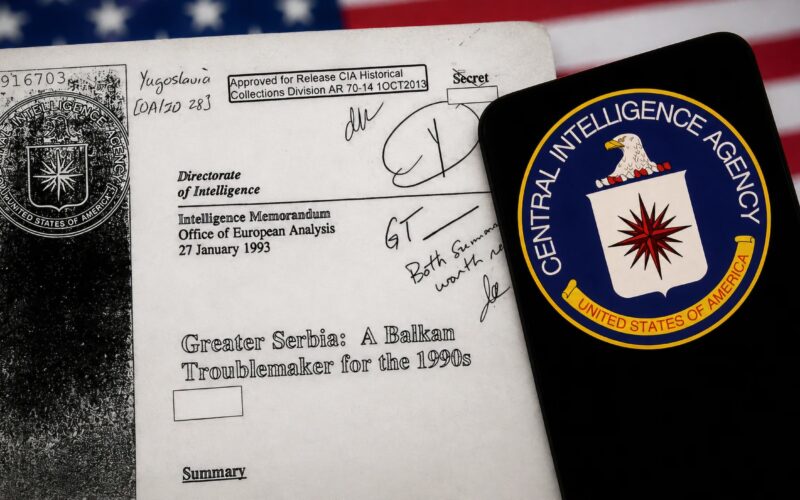
Declassified documents from the Central Intelligence Agency (CIA) demonstrate that Western policymakers had recognized the nature of Milošević’s policies at a very early stage. In a classified intelligence assessment dated January 27, 1993, titled “Greater Serbia: The Source of Balkan Turmoil in the 1990s,” the CIA warned that, unless the international community acted decisively, Serbia would pursue a campaign of ethnic cleansing in Kosova. This was not a speculative assumption, but a strategic analysis grounded in developments already unfolding across the former Yugoslavia.
The CIA analysis did not merely predict the possibility of ethnic cleansing in Kosova. It situated that scenario within the broader political project known as “Greater Serbia,” which American analysts identified as the principal source of instability in the Balkans. According to the findings, the objective of Serbia’s leadership was not the preservation of Yugoslavia, as it publicly claimed, but the creation of an ethnically homogeneous Serbian state through territorial expansion into Bosnia and Herzegovina, Croatia, and Kosova.
To achieve this objective, Belgrade was prepared to employ military force, mass expulsions, and ethnic cleansing. The report warned that the absence of a firm and coordinated international response would only encourage further escalation. Kosova, therefore, was not viewed as an isolated crisis but as the next stage in a broader state strategy aimed at realizing the “Greater Serbia” project.
The significance of this intelligence report remains profound today because it directly challenges the narrative promoted by Belgrade for decades, that the wars of the 1990s were spontaneous conflicts or defensive reactions to separatist movements. On the contrary, American intelligence concluded that the wars in Croatia, Bosnia and Herzegovina, and Kosova formed part of a single political and military strategy whose objective was Serbia’s territorial expansion through the violent transformation of the ethnic composition of contested territories. Within this framework, ethnic cleansing was not understood as an unintended consequence of war but as one of the principal instruments through which the “Greater Serbia” project was to be implemented.
Against this historical background, Minister Paunović’s recent statement cannot be interpreted merely as an expression of nostalgia for Milošević’s regime. Instead, it represents the re-emergence in public discourse of an ideology that American intelligence had already identified in 1993 as one of the gravest threats to peace and stability in the Balkans.
When a member of the Serbian government publicly declares that she would have carried out ethnic cleansing in Kosova, she is effectively legitimizing the same political project that the CIA identified as the “Greater Serbia,” a project that ultimately resulted in hundreds of thousands of victims, millions of displaced persons, and some of the gravest crimes committed in Europe since the Second World War.
The historical importance of the CIA report also lies in the fact that it fundamentally challenges Belgrade’s long-standing claim that the Kosova War was a consequence of NATO’s intervention. The assessment demonstrates that plans to ethnically cleanse Kosova’s Albanian population had already been identified years before the outbreak of the war and well before the North Atlantic Treaty Organization launched its military intervention.
The CIA further concluded that tensions in Kosova could not be resolved through political reforms because Milošević’s regime had no genuine interest in compromise. Instead, it was prepared to use military force to alter Kosova’s demographic composition. The intelligence report warned that only determined action by the international community could prevent such an outcome. History ultimately proved that warning to be well founded. Six years later, the scenario outlined in the CIA report became reality. The Serbian state apparatus launched a systematic campaign aimed at the mass expulsion of Kosova Albanians and the violent transformation of Kosova’s ethnic composition.
During 1998-1999, the Serbian state apparatus carried out a coordinated campaign of terror against Kosova’s ethnic Albanian population. Entire villages were burned, thousands of civilians were killed, and approximately one million Kosova Albanians were forcibly expelled from their homes. The massacres in Reçak, Izbicë, Krushë e Madhe, Mejë, Poklek, Pastasel, Dubravë, and dozens of other locations were not isolated wartime atrocities. Rather, they formed part of a coordinated state strategy aimed at expelling Kosova Albanians and forcibly altering the province’s ethnic composition.
This conclusion was subsequently reinforced by the International Criminal Tribunal for the former Yugoslavia (ICTY). In its judgments, the Tribunal found that senior Serbian political, military, and police officials had participated in a joint criminal enterprise whose objective was to permanently alter Kosova’s ethnic composition through mass expulsions, terror, and the systematic use of violence. Against this legal and historical background, Minister Paunović’s statement is more than a defense of Milošević’s policies, it constitutes a public affirmation that ethnic cleansing continues to be regarded by segments of Serbia’s political elite as an acceptable instrument for achieving political objectives.
No country seeking membership in the European Union can credibly maintain ministers who publicly express regret that a campaign of ethnic cleansing was not fully carried out without facing serious political and diplomatic consequences. In any functioning European democracy, such a statement would almost certainly provoke immediate resignation, widespread political condemnation, and institutional accountability. In Serbia, however, the statement passed with almost no meaningful official response. That silence is as significant as the statement itself, for it suggests that Serbia has yet to undergo a genuine process of confronting its past.
Unlike Germany after the WW II, Serbia has not undertaken a comprehensive political and societal break with the ideology that fueled the wars of the 1990s. There has been no comparable process of acknowledging responsibility for wartime crimes, while many individuals associated with Milošević’s regime, or their political successors, continue to occupy influential positions in political and public life.
The persistence of such rhetoric is therefore not accidental. President Aleksandar Vučić served as Serbia’s Minister of Propaganda under Milošević during the Kosova War. At the same time, influential segments of Serbia’s political establishment, media, and security structures continue to promote narratives that deny or relativize war crimes, minimize the genocide in Srebrenica, and portray Serbia primarily as a victim of international intervention. Within such an environment, Paunović’s remarks cannot reasonably be dismissed as an individual aberration. Rather, they reflect an ideological continuity that has never been fully separated from the legacy of the Milošević era.
The statement is particularly troubling because it comes at a time when Serbia continues to modernize its armed forces, deepen its strategic partnerships with Russia and China, and support parallel structures in northern Kosova. In such a political and security environment, rhetoric that legitimizes ethnic cleansing cannot be viewed as an isolated incident. Instead, it forms part of a broader political discourse that continues to generate instability throughout the region.
The terrorist attack in Banjskë in September 2023 further reinforced these concerns. The discovery of substantial quantities of heavy weaponry following the attack, together with the degree of organization demonstrated by the armed group, indicated that this was not a spontaneous act of violence but a carefully planned operation of considerable scale. The incident underscored that the use of force remains among the political instruments available to actors linked to Belgrade.
Viewed in this broader context, Minister Paunović’s statement cannot be separated from the region’s wider political and security dynamics. It is not merely a reference to the past, it is a troubling indication that the ideology which once justified war and ethnic cleansing continues to survive within influential segments of Serbia’s political establishment.
The 1993 CIA assessment carries another important implication. It demonstrates that the international community cannot plausibly claim that it was unaware of the dangers developing in Kosova. Years before the outbreak of the war, American intelligence analysts had identified the strategic objectives of Milošević’s regime and warned of the consequences that international inaction could produce.
Consequently, NATO’s intervention in 1999 should not be understood as the cause of the conflict, as Belgrade’s official narrative continues to assert, but as a response to a political and military project that had already been identified, documented, and analyzed years in advance. The campaign of ethnic cleansing directed against Kosova’s Albanian population was not an unforeseen consequence of war, it corresponded closely to the scenario the CIA had warned earlier. Without international intervention, the warnings issued by American intelligence might well have materialized on an even greater scale. Kosova could have faced an even deeper humanitarian catastrophe, while Europe risked witnessing another major tragedy only a few years after the genocide in Srebrenica. For these reasons, statements such as the one made by Minister Paunović cannot be dismissed or relativized in the name of regional stability or political dialogue. Lasting stability cannot be achieved by remaining silent in the face of the glorification of war crimes or the rehabilitation of the ideologies that produced mass violence. Instead, it must rest on the acknowledgment of historical truth, political accountability, and respect for the principles upon which the European order was rebuilt after World War II.
The European Union bears particular responsibility in this regard. It is not sufficient to promote the normalization of relations between Kosova and Serbia while senior Serbian officials continue to employ rhetoric that justifies or relativizes ethnic cleansing. The European integration process cannot be reduced to technical reforms and economic benchmarks alone. It must also require a genuine confrontation with the past, recognition of crimes committed, and an unequivocal rejection of the political legacy of Milošević.
Any state seeking membership in the European Union must demonstrate not only institutional capacity but also a clear and credible break with policies that have undermined peace and security on the European continent. The denial of war crimes, the glorification of individuals responsible for conflict, and the normalization of rhetoric advocating ethnic cleansing are not merely domestic political issues. They have direct implications for regional stability and European security.
International institutions must also recognize that the denial or distortion of the past is not simply a historical problem. It creates the ideological conditions in which future tensions and conflicts can emerge. The history of the Balkans repeatedly demonstrates that political rhetoric which dehumanizes entire communities and legitimizes their expulsion often precedes violence on the ground. For that reason, every attempt to normalize statements advocating or excusing ethnic cleansing should be regarded not merely as offensive political rhetoric but as a warning sign with profound implications for Europe’s security architecture.
For Kosova, this episode serves as another reminder that independence was not the product of an accidental political development but the outcome of a long struggle for survival against a state project aimed at forcibly transforming its demographic and political reality. The CIA declassified document makes this unmistakably clear. The threat was neither imaginary nor a retrospective interpretation developed after the war. It was identified, analyzed, and documented years before it materialized.
Accordingly, Minister Paunović’s statement should not be regarded merely as another episode in a contentious political debate. It should instead be understood as further evidence that the ideology responsible for the wars of the 1990s has not entirely disappeared from Serbian politics. Rather, it continues to manifest itself in different forms: through the denial of war crimes, the relativization of responsibility, the glorification of figures associated with Milošević’s regime, and, in its most extreme expressions, through the open endorsement of policies of ethnic cleansing.
History has already rendered its judgment. In 1993, the CIA warned that ethnic cleansing in Kosova formed part of a realistic scenario within Belgrade’s broader political strategy. Between 1998 and 1999, the Milošević regime attempted to implement that strategy through a systematic campaign of violence and mass expulsions. NATO’s military intervention prevented an even greater humanitarian catastrophe.
Today, when a minister in the Government of Serbia publicly expresses regret that such a project was not carried through to completion, the responsibility for confronting this rhetoric does not rest solely with Serbia. It is equally the responsibility of the international community to prevent the normalization of political language that once preceded one of the gravest humanitarian tragedies in Europe since 1945.
The Balkans cannot build a durable peace on the foundation of historical amnesia. Peace requires truth, accountability, justice, and an unequivocal rejection of the ideologies that produced war, ethnic cleansing, and crimes against humanity. Only on that foundation can a future be built in which the tragedies of the past are neither forgotten nor repeated. /The Balkan Report/
Discover more from The Balkan Report
Subscribe to get the latest posts sent to your email.