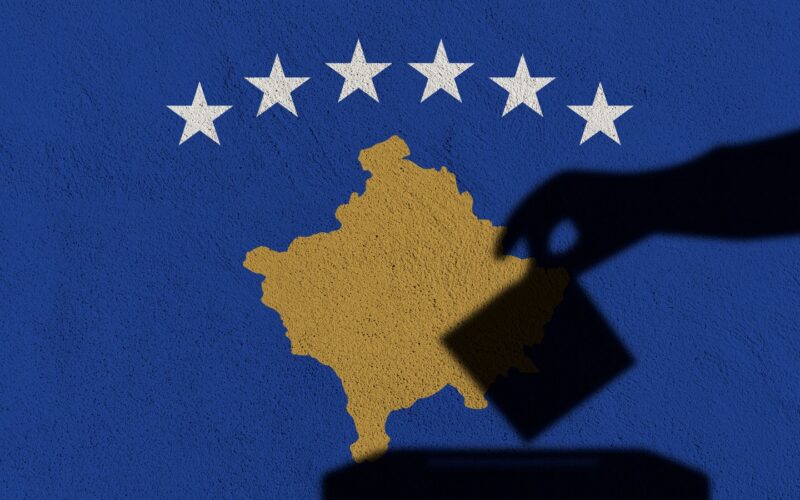
In modern democracies, electoral integrity is the cornerstone of political legitimacy and effective institutional governance. In Kosova, however, the challenge of protecting electoral processes extends beyond ensuring democratic standards or the proper administration of elections. It is directly linked to a far broader and more complex issue: Serbia’s continued interference in the political and institutional affairs of a sovereign state.
For more than a decade, elections in Kosova have been accompanied by persistent concerns about Belgrade’s influence over the voting behavior of the Serb community. This can no longer be viewed as a series of isolated incidents but rather as part of a well-organized strategy aimed at maintaining political control over Kosova Serbs, suppressing political pluralism within the community, and using their institutional representation to advance Serbia’s state interests.
The greatest paradox lies precisely here. While Belgrade claims to defend the interests of Kosova Serbs, in practice the Serbian regime has consistently restricted their space for free political representation. Instead of allowing Serb citizens to freely choose the political alternatives they believe best serve their interests, the political process has frequently been characterized by direct and indirect pressure favoring structures backed by Belgrade.
Through its Constitution and its advanced model of minority protection, Kosova has granted the Serb community extensive political and institutional rights, including reserved seats in parliament, representation in government, and significant powers at the local level. These guarantees are among the most advanced in Europe when it comes to minority protection. Yet the democratic value of these guarantees becomes questionable when elected representatives do not necessarily reflect the free will of citizens but are instead influenced by political centers beyond Kosova’s borders.
Serbian interference in Kosova’s elections has not been limited to political statements or public support for specific political actors. Over the years, an extensive influence network has emerged, intertwining Serbian state institutions, the Serbian Orthodox Church, intelligence services, propaganda and disinformation networks, state-controlled media, and political structures operating on the ground. At the center of this mechanism has been the Serb List, which has evolved into Belgrade’s primary political instrument for maintaining control over the political representation of Kosova Serbs.
Through this mechanism, Serbia has managed to exert considerable influence over the ten parliamentary seats guaranteed to the Serb community in Kosova’s Assembly, as well as over local governments in many Serb-majority municipalities. This has created a political reality in which many decisions affecting the daily lives of Kosova Serbs are perceived as part of a broader Serbian state strategy rather than as the result of local priorities or community needs.
The political dimension is only one part of the problem. Kosova’s institutions have repeatedly raised concerns about the activities of Serbian security and intelligence services and their connections to various operational networks inside Kosova. These activities have included intelligence gathering, influence operations, exerting pressure on political opponents, and coordinated disinformation campaigns.
In recent years, criminal networks linked to Milan Radoičić have also played a significant role. The terrorist attack in Banjskë in September 2023 highlighted the extent to which criminal structures, political actors, and security elements have become intertwined in pursuit of Belgrade’s strategic objectives. For many international observers, this was the moment when it became clear that the destabilization of Kosova was not merely a political issue but also a regional security challenge.
Perhaps the least discussed aspect outside Kosova is that the primary victim of these interventions is not only the state of Kosova itself but also the Serb community. Recent history provides numerous examples of pressure directed against political alternatives that were not aligned with Belgrade’s interests.
In 2013, Dimitrije Janićijević, a candidate for mayor of North Mitrovica, was murdered. Five years later, in January 2018, Oliver Ivanović was assassinated after openly challenging the political dominance of the Serb List. His killing remains a symbol of the climate of fear and intimidation that has characterized political life within the Serb community.
In 2019, the Independent Liberal Party suspended its political activities, arguing that the minimum conditions for free and democratic competition no longer existed. The decision was widely interpreted as evidence of the shrinking political space available to alternatives that did not enjoy Belgrade’s support.
Meanwhile, the methods of interference have become increasingly sophisticated. In the age of social media and digital communication, influence is no longer exercised solely through physical pressure or institutional control. Hybrid operations and information warfare have become central instruments of this strategy.
Virtually every electoral cycle in Kosova has been accompanied by intensified disinformation campaigns aimed at creating a sense of insecurity, fueling interethnic tensions, and undermining the legitimacy of Kosova’s institutions. Various narratives portray Kosova as a threat to the Serb community while presenting Serbia as its only protector. This approach seeks to create political and emotional dependency, shifting voters’ focus away from local interests and toward Belgrade’s strategic objectives.
For the regime in Belgrade, control over Serb political representation carries significance far beyond Kosova itself. The Kosova issue remains the most sensitive topic in Serbian domestic politics and a powerful tool of nationalist mobilization. For more than a decade, the government of Aleksandar Vučić has built much of its political legitimacy on managing and instrumentalizing crises related to Kosova. Every new tension, confrontation, or crisis serves to reinforce the narrative that Serbia is under constant threat and must defend its national interests.
In this way, Kosova-related crises become useful mechanisms for consolidating political power, diverting public attention from economic, social, and democratic challenges within Serbia, and strengthening the nationalist discourse that dominates public debate. At the same time, Belgrade seeks to maintain a carefully balanced position internationally, presenting itself as a key Western partner and a guarantor of regional stability while continuing to cultivate close ties with Russia and China. Within this delicate geopolitical balancing act, influence over Kosova remains both a strategic asset and one of the key instruments of the current Serbian regime’s political survival.
The consequences for Kosova are evident. Political control over the guaranteed Serb seats has frequently affected institutional functioning, government formation processes, and the advancement of important reforms. In certain cases, this influence has been used to block political initiatives or generate institutional crises that extend well beyond normal parliamentary disagreements.
This places Kosova before a delicate challenge. On one hand, it must continue to protect and advance the rights of the Serb community. On the other, it must ensure that these mechanisms of representation do not become instruments through which another state interferes in its internal decision-making. This is not about limiting the rights of Serbs but about guaranteeing that those rights can be exercised freely and independently.
In today’s international environment, electoral interference has become one of the most serious challenges facing democratic societies. From Europe to North America, states have invested in influence operations, disinformation campaigns, and public opinion manipulation to advance geopolitical objectives. Kosova is part of this broader global trend, but it faces a far more direct form of pressure due to its unresolved relationship with Serbia.
For this reason, limiting Serbian interference in Kosova’s electoral processes should not be viewed solely as a matter of Kosova’s national interest. It represents an important contribution to the defense of democracy, the rule of law, and stability throughout the Western Balkans.
Ultimately, Serbia’s interference in Kosova’s elections is not merely a matter of day-to-day politics. It represents a long-term challenge to Kosova’s sovereignty, to the democratic rights of the Serb community, and to regional stability. Protecting electoral integrity, strengthening political pluralism, and limiting the influence of external actors are not merely state objectives for Kosova. They are part of a broader struggle to defend democracy at a time when hybrid interference and political manipulation are becoming increasingly sophisticated across Europe. /The Balkan Report/
Discover more from The Balkan Report
Subscribe to get the latest posts sent to your email.